Doctoral Research
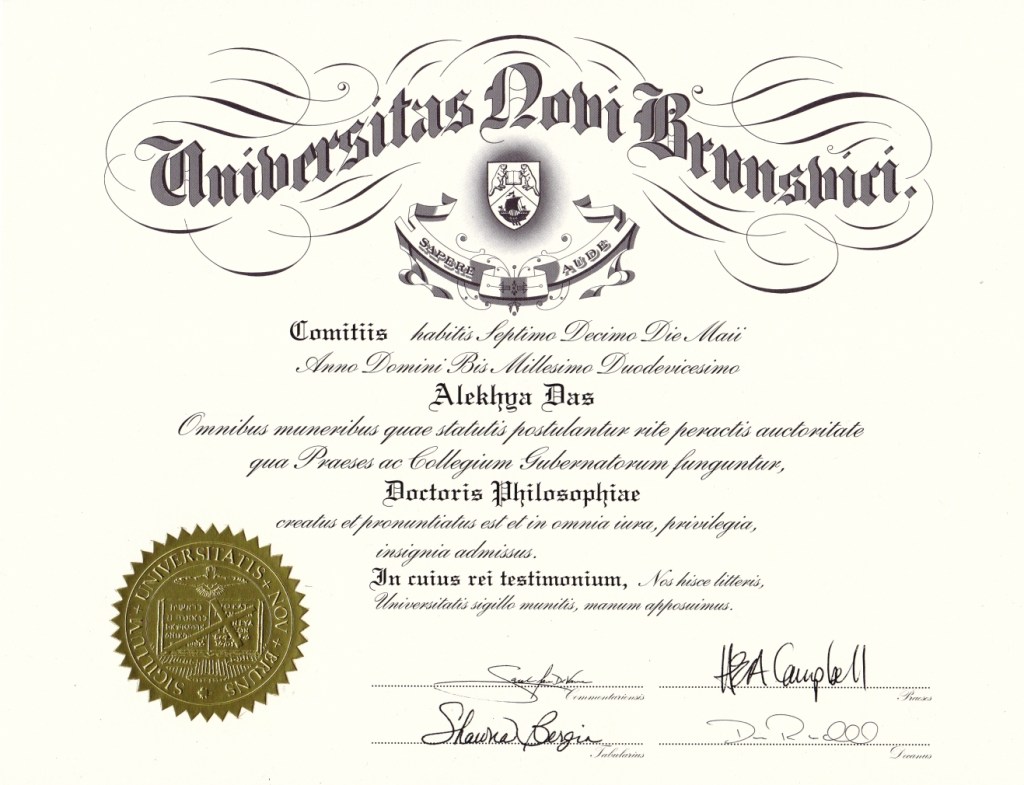
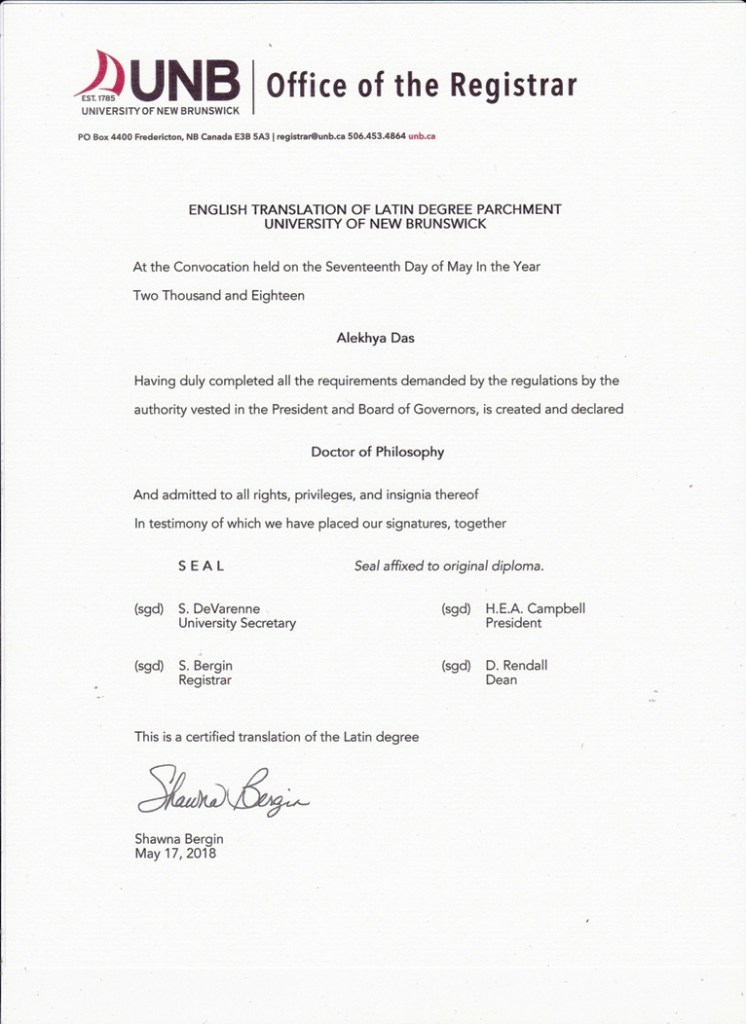
The Role of Husband in Women’s Health-seeking Behavior (title)
Dept. of Sociology, University of New Brunswick, Fredericton, Canada
This research examines subjective perceptions and interpretations regarding health & illness of women, from a poor and marginalized urban community, residing in a slum locality (Gautampuri resettlement colony) in Delhi, India. This study provides comprehensive insight into the health and medical treatment seeking behaviors of women in this community, as well as the factors that affect thee behaviors.
The participants of this research are: women, men of this community, and, community-level workers of NGO Arpana. For my data collection, I partnered with NGO Arpana, which works in this community. The methodology of this study comprises of: qualitative research design & fieldwork strategy, and, ethnography involving one-year community immersion as a participant observer. Data was collected via – observation, focus-group discussions and semi-structured interview methods. The data (talks, narratives, discourses) was in Hindi language, which was translated and transcribed. Discourse, narrative, thematic and content analyses, were used to evaluate the data. The theoretical frameworks of: Health-seeking Behavior, Agency, and Symbolic Interactionism, inform this research.
Summary of findings:
In this community, women’s health-seeking behavior (HsB) compromises of three categories: (i) health and illness behaviors, (ii) medical-care utilisation behaviors, and, (iii) reproductive behaviors. The first category (health and illness behaviors) entails articulations of women’s bodies, definitions of what is healthy and unwell, and interpretations of diseases; which shapes the other two categories (medical-care utilisation and reproductive behaviours). Husband’s role manifests in all three aforementioned categories of women’s HsB; and the role is interpreted in two distinct ways – the actual role, and, the ideal role (that is, what husbands’ role should be).
As regards (i) women’s health and illness-related behaviour, husbands’ role pertains – to knowledge of women’s health/illnesses, and, to attitudes concerning wellbeing/ailments of wives. Vis-à-vis knowledge of women’s health/illnesses, actual role of husbands embodies husband’s lack of awareness. Hence, for ideal role, wives prefer informed husbands, regarding women’s ailments, causes and cures. Regarding attitudes concerning wellbeing/ailments of wives, husbands’ actual role is characterised by husbands’ apathy and avoidance. Vis-à-vis ideal role, women aver that husbands should enquire on a daily basis, irrespective of their perceived physical condition.
As regards (ii) women’s utilisation of medical care services, husbands’ role applies – to decisions concerning wives’ medical-care, to medical treatment of wives, and, to household tasks of wives during illnesses. Vis-à-vis decisions concerning wives’ medical-care, husband’s actual role varies considerably, based on the nature of illness and treatment options. As for ideal role, half of the wives favour husbands’ detachment. However, the rest affirm husbands’ complete involvement, due to spousal norms of their community. In the context of medical treatment of wives, actual role of husbands is denoted by husbands’ lack of participation. For ideal role, men affirm husbands’ participation. However, women’s opinions are divided because husbands accompanying their wives means loss of precious wages, which is a huge barrier in seeking care. Regarding household tasks of wives during illnesses, husbands’ actual role is characterised by nonparticipation. This affects women’s health-seeking behaviour, as when wives are bedridden or hospitalised; the foremost impact is on their daily responsibilities. Consequently, wives somehow continue their chores, thus hindering recuperation and/or aggravating ailments. For ideal role, women affirm husbands’ participation with respect to wives’ household tasks during their illnesses.
As regards (iii) reproductive behaviour of women, husband’s role encompasses – pregnancy and childbirth, and, women’s contraception. With reference to pregnancy and childbirth, the actual role of husbands comprises of lack of involvement, due to reasons like their tradition of letting elders in a husband’s family to oversee pregnancies and childbirths. For ideal role, younger and mature wives differ; as younger wives prefer husbands’ full influence in reproductive matters, and deem that other family members should stay distant. Vis-à-vis women’s contraception, husband’s actual role is contingent on type of contraception, as for permanent methods, there is husbands’ influence, but not for temporary methods. As regards ideal role, wives prefer husbands’ involvement, especially for permanent methods.
Full Dissertation
Cultivating Wellness: Flow and Play in Serous Leisure Pursuits (2017)
Dept. of Social Sciences, University of New Brunswick, Saint John, NB, Canada
(Principal Investigator: Prof Janet M.C. Burns, Dept. of Social Sciences, UNB, Saint John, NB.)
This research examines serious leisure pursuits (SLP), which is long-term and regular pursuit of leisure activities (like singing, swimming, hunting, and painting) in New Brunswick (NB), Canada. The methodology used was: qualitative design, case study, and semi-structured interviews. Data (talks, discussions) was transcribed, and then analysed using content and narrative analysis. The participants of this study were: Fredericton (NB) residents, who have regularly pursued leisure activities for a lengthy period
Role & Contributions (as Researcher):
- Review theoretical and substantive literature (leisure pursuits, flow and play perspectives, creativity and strategy in leisure, mindfulness meditation)
- Design the study – question set, data collection tool, ethics procedures, study execution (contact prospective respondents, conduct face-to-face interviews, maintain field notes)
- Conduct in-depth case studies of four Fredericton residents, who pursue hunting, painting, swimming, and signing.
- Transcribe data; data analysis – how do leisure activities generate personal enrichment and self-actualization, and sense of timelessness and complete absorption in the experience.
Summary of findings:
The aspects of play and flow present in all SLP activities. But the degree, and enabling and obstructing conditions, vary, based on factors like the nature of SLP, characteristic and perception of the pursuer, and frequency of activity. For example, ‘play’ is least in swimming, as the nature of SLP does not entail much flexibility; although swimmers prefer such an activity, which is repetitive and devoid of fluctuations (or play). Play is high for hunters as SLP environment (i.e. hunting conditions) changes constantly.
–Dr. Baba Das (December 2017)

 alekhyadas.ca